Background
A 250MW CA Parsons turbine IP cylinder was opened for inspection and severe shroud separation was found in the rotating as well as stationary blade shrouds. The norm is that this case would be a total re-blade of the cylinder. This was not possible due to spares availability, cost and expected life of the plant.
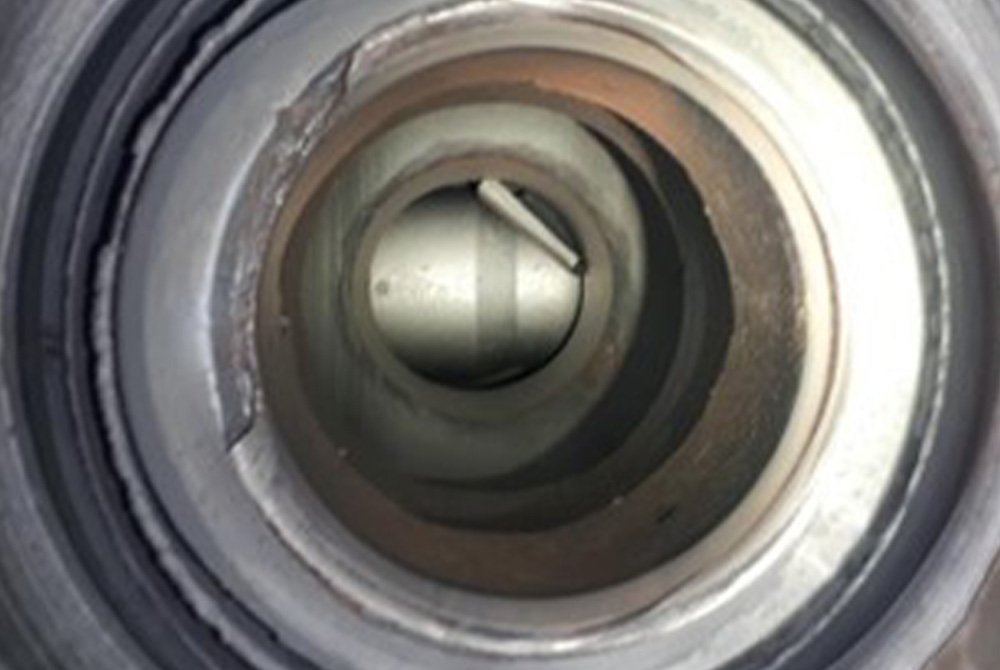
Blade shroud separation is the phenomenon describing the loss of the blade to blade shroud connection of blades in a packet. This connection is required for the damping of vibration and reducing the stress in individual blades. Without this connection the risk of blade failure is high. The picture below shows blades separated and also shrouds moving relative to each other. This could be described as early symptoms of eventual failure.
ProGen proposed a weld repair of the blade shrouds to the design packet configuration. Such welding has been done before elsewhere in the world but not to the extent required on this unit nor has it been carried out in New Zealand. What made this more challenging was that it had to be done without any involvement from the OEM.
The proposed repair process was engineered with close consultation and support from the client engineering staff, which included a thorough risk review.
Preparation
In preparation for the shroud welding, test pieces of the same material and geometry as the blades were prepared to qualify the weld procedure and welders to ensure it could be done to the required standard. The test pieces were made as representative as possible by brazing them together and positioning the excavation and weld to simulate the repair done to the blading on the rotor and also in casing.
The key focus areas were:
- The tooling required for the best results
- Temperature measurement and control
- NDE
- Effect of the brazing material in the welding
- Quality of the weld
- Working back of the weld to the surface of the shroud
- The rotor balance condition had to be retained
Repair
The following process was used for the repair:
- The blade packets were identified and marked, together with all of the identified separations to be weld repaired.
- The weld preparation was completed, and the rotor cleaned.
- Preheat, Welding, NDE was done on a batch basis as described by the following figures.
Conclusion
Approximately 1500 welds were done on the rotor and the casing blade shrouds. All the welds were cleared by NDE. No balancing was required on the rotor prior to re-installation. The cost and duration of the repair was a fraction of what it would be for a re-blade of the cylinder. The unit returned to service without any vibration or operational problems and has been in service for a year without any problem.